Senior Phase & FET Phase

Langerugskool

Senior Phase & FET Phase

Grade 7 – 9 & Grade 10 – 12

Langerug School follows a holistic approach to the support of our learners, therefore we act as a multidisciplinary team when dealing with the variety of needs presented by the learners in our care.

Grade 7 – 9 Subjects

We offer nine subjects, as dictated by the National Education Department in the CAPS curriculum for mainstream schools:
  • Afrikaans Home Language
  • English First Additional Language
  • Mathematics
  • Life Orientation
  • Natural Sciences
  • Economic and Management Sciences
  • Social Sciences
  • Technology
  • Arts and Culture

Grade 10 – 12 Subjects

We offer six subjects, as dictated by the National Education Department in the CAPS curriculum. The National Senior Certificate (NCS) with endorsement is offered.
The four compulsory subjects are:

  • Afrikaans First Additional Language
  • English First Additional Language
  • Mathematical Literacy
  • Life Orientation
Learners must choose two more subjects.
The choices are as follows:

  • Agricultural Technology
  • Consumer Studies
  • Computer Applications Technology

Support

Smaller class groups (maximum 14) follow an adapted and inclusive mainstream curriculum (CAPS) that allows for individual attention to learners.

A structured learning environment

  • The area inside the classroom is favourable for learning with ample space between desks. Pages in work books are numbered and colour codes are used for different subjects.
  • A set 5-day timetable is followed.
  • Changes in the daily routine are kept to an absolute minimum.
  • Positive communication between parents and educator is ensured.
  • Regular discussions with parents take place and parent evenings occur once per term.
  • Assessment accommodations are applied where needed.
  • The implementation of an effective code of conduct enhances the development of self-motivation, self-assertion and leadership skills.
  • Learners are permitted to use sensory aids to increase concentration.
  • Regulating exercises and a music program form part of the daily program.
  • Cooling-down periods are allowed when needed.

Technology

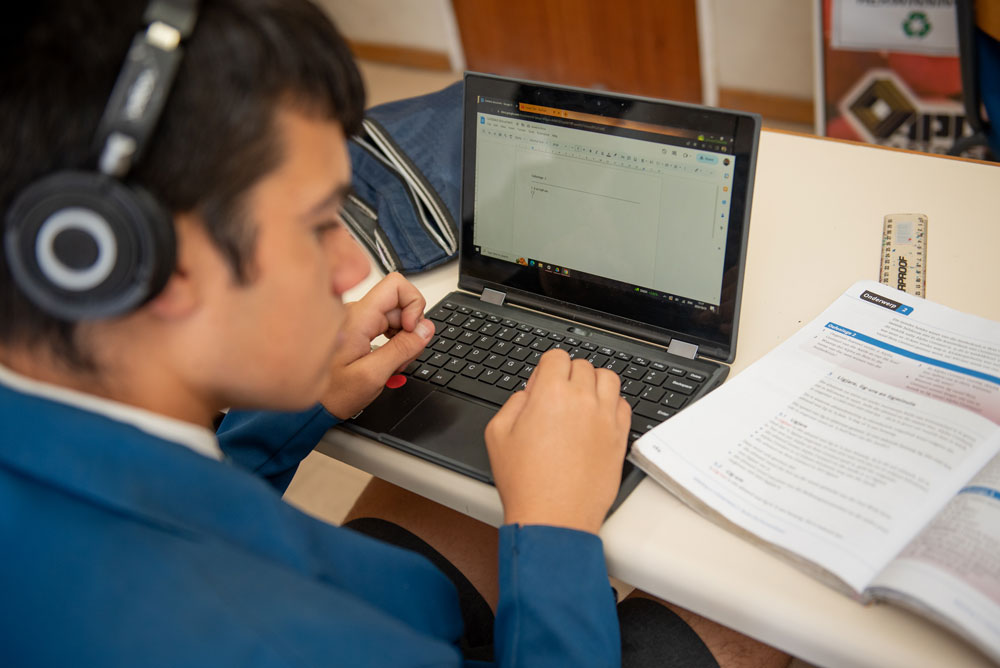
  • Technology is utilised during the presentation of lessons. Devices are used in class and during assessments so that the use of speech-to-text and text-to-speech are accessible to the learners.

Study methods

  • Support with learning is offered by means of summarised notes, specifying which work needs to be studied and explaining the construction of exam papers.
A holistic approach to support by a multidisciplinary auxiliary team.
Please feel free to view the following